Table Mountain is a flat-topped mountain forming a prominent landmark overlooking the city of Cape Town in South Africa. It is a significant tourist attraction, with many visitors using the cableway or hiking to the top. The mountain forms part of the Table Mountain National Park. With spectacular views from the top and great panoramic views of the city this mountain tops the list of places to see in South Africa. For those who can’t take the hike, they offer a 3min ride on a cableway from top to bottom. At the top you’ll find a restaurant, cableway cocktail bar (which can be rented out for events) and other hiking activities.
 Table Mountain the city of Cape Town
 Table Mountain the city of Cape Town
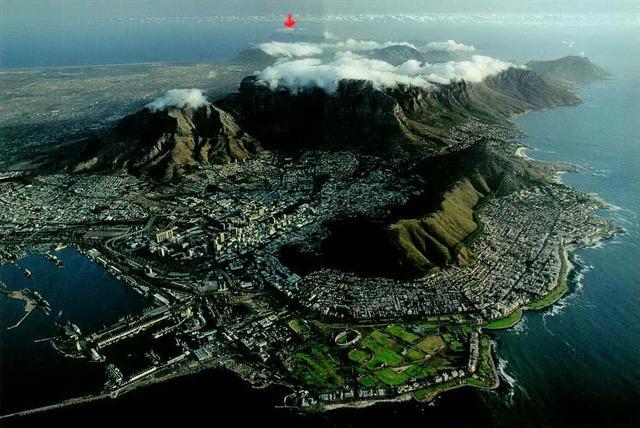 Table Mountain the city of Cape Town
 Table Mountain the city of Cape Town


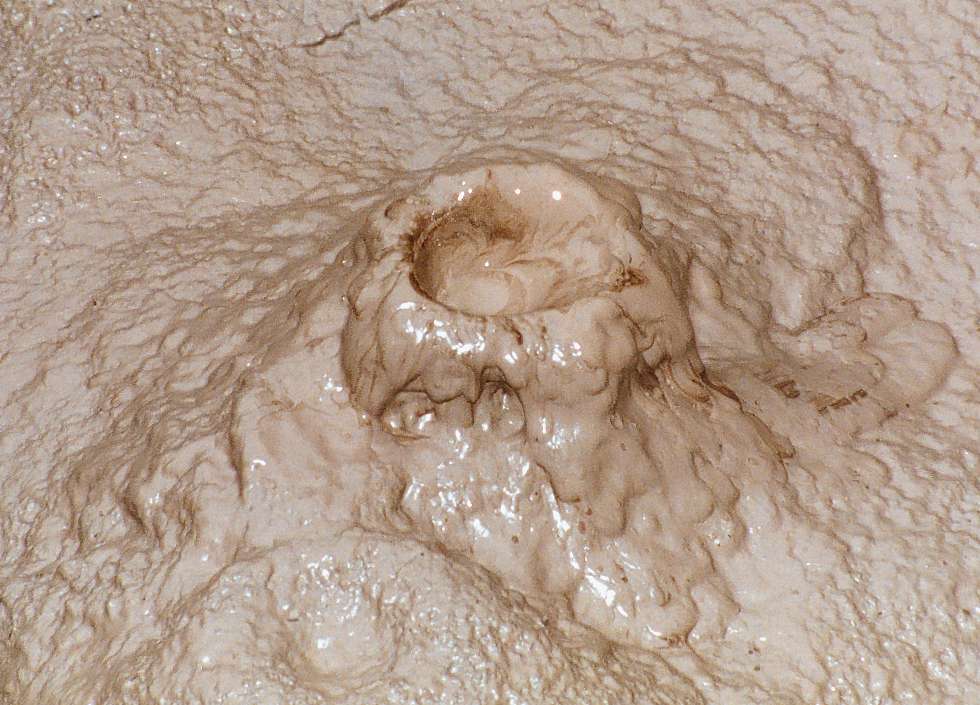



In volcanic regions, mud volcanoes are usually small volcano-shaped cones of mud, usually less than 1-2 m tall as shown in this image. They are built as mud erupts from a vent, either as as a flowing liquid or ejected into the air. The mud is formed as acid gases rise through the crust, react with rock and turn it into clay. The mud is a mixture of clay and groundwater. The mud volcanoes erupt following pressurization from geothermal steam and gases.
Mud volcanoes can also form in non-volcanic areas. They form where subsurface layers of fluidized sediments, like silt and clay, have been pressurized by tectonic activity, such as at the boundaries of the earth's crustal plates. They can also form by the accumulation of hydrocarbon gases. The pressurized sediment is forced upward, where it erupts on the earth's surface to form conical mounds of mud or even lakes of mud if the eruption lasts long enough. These mud volcanoes are usually erupted at lower temperature and with less associated gas and acid than mud volcanoes in active volcanic regions.
Photo: The mud volcano shown here is from the Norris Geyser Basin, Yellowstone National Park, Wyoming. It is about 40 cm tall.