Why do mature redwood trees have trunks that rise two hundred feet before branches commence, live for centuries and have bark that’s a foot thick? Because they are adapted to fire.

Why does the silver-green chaparral that covers California’s hills and mountains burn so easily? Because it’s supposed to.

Why, other than its color, is the California Poppy such an appropriate flower for the Golden State? Because it is adapted to both fire and earthquakes. Says Wikipedia, “It grows well in disturbed areas and often recolonizes after fires”.
Of course, so do we. That’s why it’s not weird to find humans colonizing hillsides and other “disturbed areas” of California. Case in point: I am writing this in a house sited on an former landslide, not far from the perimeters of two wildfires that claimed hundreds of other houses in the past few months.
Every spot on Earth is temporary, but California is a special example. As permanence goes, California is a house of cards.
For example, take a look at some of the animations here, prepared by geologists at UCSB. Watch as a sheet of crust the size of a continent gets shoved under the western edge of North America. Debris that piled up in the trench where that happened is what we now call the Bay Area. Submerged crust that melted, rose and hardened under North America — and was just recently exposed — we now call the Sierras. Take a look at the last 20 million years of Southern California history. It’s a wreck that’s still going on. One section of that wreck is a bend along the boundary between plates of crust. Mountains pile up along that bend, like snow in front of a plow. The biggest of these ranges we call the San Gabriels. Those are on fire right now. Add up all the Southern California wildfires over the last twenty years and you’ll get a territory exceeding that of several smaller states.
My point is perspective. The human one is so brief that it can hardly take in the full scope of What’s Going On, or what our lives contribute to it. In a geological context, what we contribute are carbon and fossils. We do that by dying. Other planets have geologies as well, but none have marble, limestone, coal or oil. Those are all produced by dead plants and animals. It would be hard to make heat on Mars because — as far as we know — there is no dead stuff to burn.
Humans love to make structures and produce heat, which means we have an unusually strong appetite for dead stuff. Even cement and steel require dead stuff in their making.
If you fly a lot, as I do, you start to notice black lines on the landscape. These are coal trains that move like ant trails from mines in the West to power plants all over the country. The largest of these mines are in Wyoming, more than 50% of which has coal to burn. This coal consists of dead stuff that has been buried for dozens of millions of years, and took at least as long to form. In Uncommon Carriers, John McPhee says the largest power plant in Georgia, Plant Sherer, “burns nearly thirteen hundred coal trains a year—two thousand miles of coal cars, twelve million tons of the bedrock of Wyoming.”







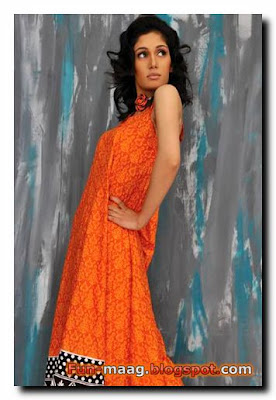

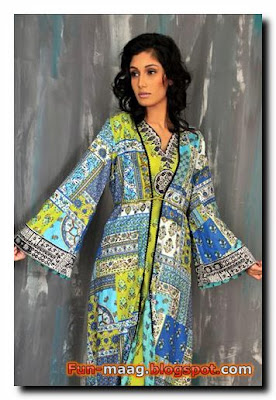
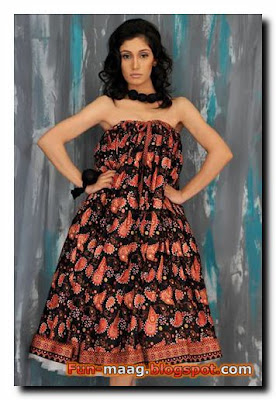



 In Oman, I saw for my first time in remembrance (in my childhood I am sure I recall them but that was too long ago to rely on memory) women in shapless elegance, and on a beach just outside of Muscat, before Al Bustan Palace, as I bathed my feet in a warm sea, a woman wearing a string niqab, and shared a secret smile of comfort with her, as my non-muslim family complained of her circumstance. My sister and I bought soft sheer niqabs and tried them on in the bathroom to peer at ourselves in the mirror, still finding it odd to reconcile the identity before us with our Western prejudice. This could never be me, we thought. Not that we thought it was horrible. Six inch stilletos and skinny jeans digging into the belly are a lot harder to wear than soft-sheer-smooth-like babies'-kisses-fabric.

 What we did think we would wear ---if we had the occasion---were the Arabic gowns, called jalibyias. I snuck out of the compound-like gated ex-pat community part of my family called home in Muscat in my Souq-abaya and big straw hat and would walk for hours, and even crossed a busy highway, and often went to speak with the local shop keepers, and joked with Omani girls who hardly spoke a word of English, as they dressed me up with every pink jalibiyia and caftan they had on hand, calling a then-blonde me their Barbie. What I learnt in Oman, was that Arab girls dressed up alot more than we Westerners do. They had Western style evening gowns for evening, and these Arabic dresses for visiting or going out (which were too fancy for me to wear at most weddings here in my Western city), and even Western style designer jeans and fitted tees.

 The most common form of dress we saw in Muscat was a modest black abaya with a very pretty coloured hijab style that covered everything it is supposed to Islamically, including neck, ears, hair, and chest.

 This is a model wearing what I had considered the national dress of Oman, and especially the Capital City of Muscat. In the Hajar mountains I saw women and girls dressed in these when climbing, and it reminded me of Pakistani shalwar Kameez, but the pants were more fitted, but the top was looser and longer. The hair was generally covered in all hijab (headscarf) styles.
 A woman cab driver in Oman.